

Luxury Sardinia Travel, Personally Designed.
Granite archipelagos, limestone coves reached by sea, and an interior shaped by thousands of years of history — planned around how you like to travel.
Discovering Sardinia
 Discovering Sardinia
An island of granite, limestone and ancient stone.
Sardinia is the second-largest island in the Mediterranean, and its coastline runs for more than 1,800 kilometres. In the north-east, wind-sculpted granite meets sheltered bays and clear, shallow water. On the eastern shore, the limestone of the Supramonte drops straight into the sea, hiding coves that are easiest to reach by boat.
Inland, the island feels entirely different. Thousands of nuraghi — Bronze Age stone towers found nowhere else — stand across the countryside, and the complex at Su Nuraxi di Barumini is a UNESCO World Heritage Site. Villages in regions such as Barbagia keep their own festivals, crafts and dialects of the Sardinian language.
The table changes from one valley to the next: pane carasau, culurgiones, pecorino sardo, slow-roasted porceddu, Cannonau red wines and Vermentino di Gallura, the island's only DOCG wine.
The North-East Coast
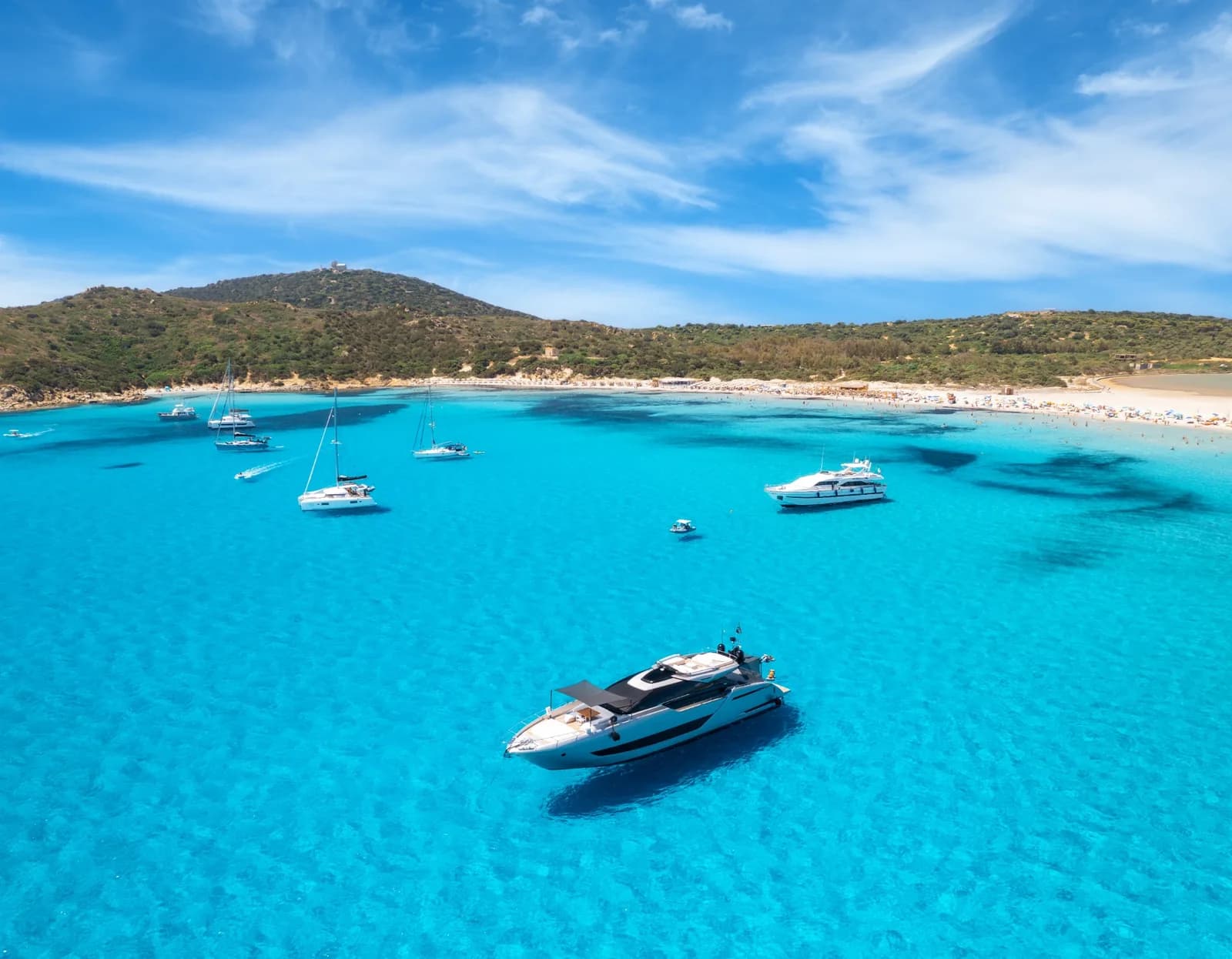
Costa Smeralda and Porto Cervo.
The Costa Smeralda — the Emerald Coast — is a stretch of granite headlands and sheltered bays in the island's north-east, developed from the early 1960s by a consortium led by the Aga Khan. Strict planning rules gave it a distinctive, low-rise architecture that still blends into the macchia-covered hills.
Porto Cervo is its heart: a yachting harbour with boutiques, restaurants and the Yacht Club Costa Smeralda, which hosts well-known regattas in late summer. Olbia's airport is about 30 kilometres away, making this the most accessible part of the island for international arrivals.
Highlights
- Porto Cervo
- The marina, the piazzetta and the hillside Stella Maris church.
- Beaches
- Capriccioli, Liscia Ruja and Spiaggia del Principe, best enjoyed early or late in the day.
- San Pantaleo
- A granite hill village inland, known for its artisans and weekly market.
- Gallura
- Cork-oak countryside and vineyards producing Vermentino di Gallura.
The Archipelago
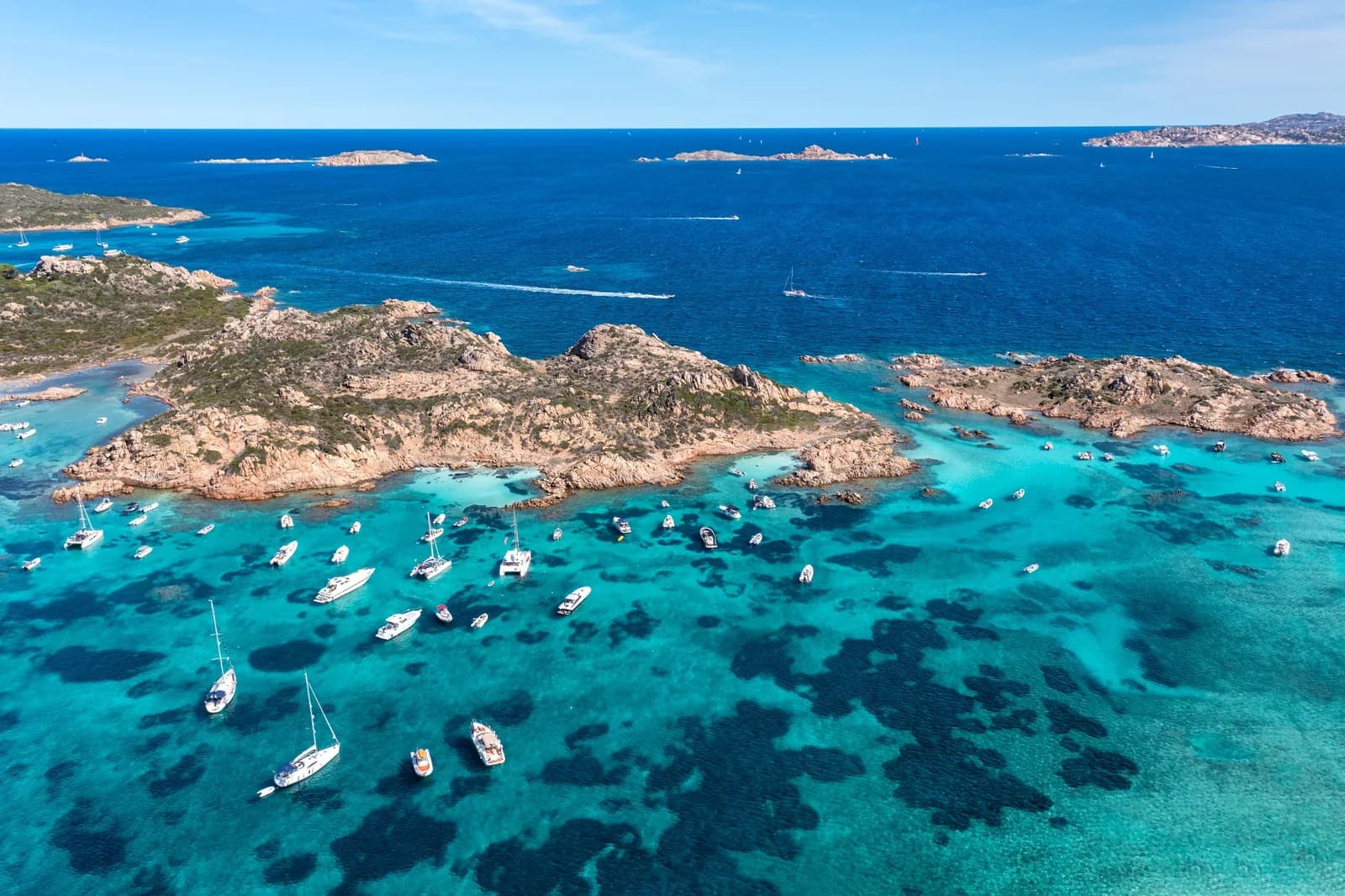
La Maddalena and private coastal days.
Just off the northern tip of Sardinia, facing Corsica across the Strait of Bonifacio, the La Maddalena archipelago is protected as a national park. Its granite islands have been shaped by the wind into soft, rose-coloured forms around channels of shallow, intensely clear water.
Ferries from Palau reach the main island of La Maddalena in around 20 minutes, but the outer islands are best explored by private boat. A skippered day lets you anchor in quiet coves, swim where the water is calmest and lunch on board — following the park's rules on where boats may go.
Around the islands
- Caprera
- Pine-covered island and former home of Giuseppe Garibaldi, now a museum.
- Spargi
- Uninhabited, with coves such as Cala Corsara and remarkably clear water.
- Budelli
- Home to the protected Spiaggia Rosa, admired from the water only.
- Santa Maria
- Shallow lagoons between Budelli, Razzoli and Santa Maria, ideal for swimming.
The East Coast
The Gulf of Orosei and Cala Luna.
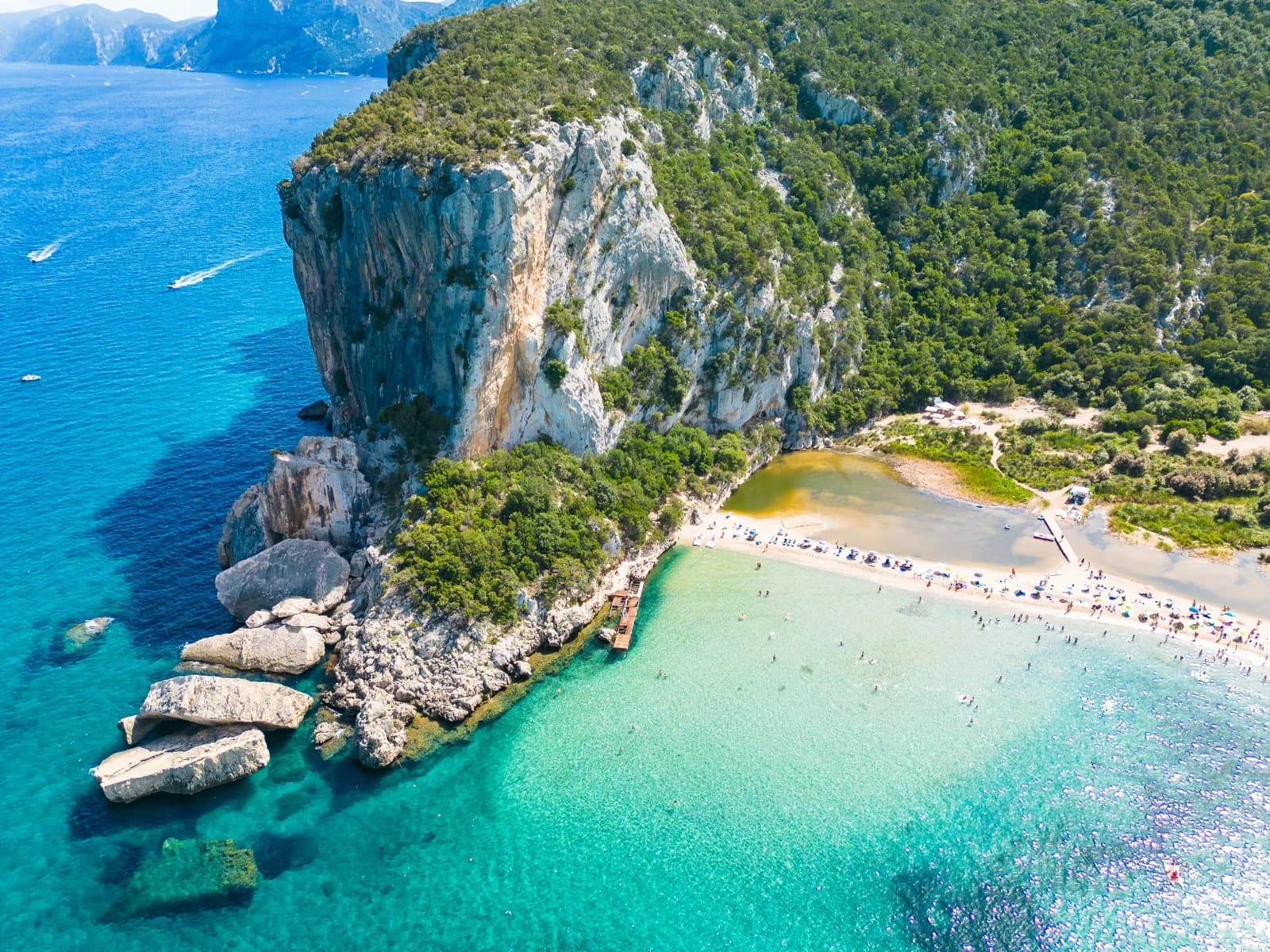
Along the eastern shore, limestone cliffs fall directly into the sea for kilometres at a time. There is no coastal road here, so the most celebrated beaches are reached by boat or by walking trails. Cala Gonone is approximately two hours by road from Olbia, depending on traffic and route, so the gulf is best treated as a base of its own rather than a long excursion.
The harbour at Cala Gonone is the usual starting point. A private boat lets you choose the order of coves, avoid the busiest hours and stay as long as conditions allow. Sea trips here are weather-dependent and run mainly from spring to autumn.
Along the gulf
Cala Luna
A crescent of pale sand backed by sea caves and a small freshwater lagoon, beneath a towering limestone headland. Reached by boat from Cala Gonone, or on foot along a coastal trail of a few hours.
Cala Mariolu & Cala Biriola
Smaller coves of white pebbles and startlingly clear water further south, usually visited by boat as part of a day along the coast.
Cala Goloritzè
A protected natural monument with a limestone spire rising above the beach. Boats keep their distance; the cove is reached by a well-known hiking path from the Golgo plateau.
Grotta del Bue Marino
A large sea cave near Cala Gonone with long galleries and rock formations, visited with a guide.
The Supramonte
The limestone uplands behind the coast, home to the dramatic Gola di Gorropu canyon and some of the island’s most rewarding guided walks.
Where to Stay & What to Do
Luxury accommodations and bespoke experiences.
Luxury in Sardinia takes different forms, and the right one depends on how you travel. We weigh your preferences, group size, season and the experiences that matter most before recommending specific hotels or villas — never from a fixed list.
Still choosing an area? Read Where to stay in Sardinia to compare the island's regions, or Luxury hotels in Sardinia for how the main coastal bases compare.
Ways to stay
Resort-based luxury
Full-service hotels on the Costa Smeralda with spas, beach clubs and dining on site. Suits couples and families who want everything close at hand, especially in high summer.
Private villas
Space, privacy and your own pool across Gallura and the north-east, with chefs, drivers or housekeeping arranged as needed. Often the best fit for multigenerational families and groups of friends.
Coastal and sea-focused stays
Smaller hotels near harbours such as Palau or Cala Gonone, chosen so private boat days begin a short walk away. Ideal for travellers who want to spend most days on the water.
Countryside retreats
Boutique hotels, restored stazzi and farm estates among cork oaks and vineyards. Suited to food, wine and walking, and quieter in shoulder seasons when the coast is calmer too.
Experiences we can arrange
- A private boat day through the La Maddalena archipelago, timed around wind and light
- Cove-to-cove exploration of the Gulf of Orosei by private boat from Cala Gonone
- A guided walk to Cala Goloritzè or into the Gola di Gorropu canyon
- Vermentino tastings at family wineries in the Gallura hills
- An archaeological visit to Su Nuraxi di Barumini with a specialist guide
- Learning to shape culurgiones or bake traditional breads with a local cook
Seasons
When to visit Sardinia.
Sardinia's coast is strongly seasonal. In the north, the maestrale — a north-westerly wind — can change sea conditions quickly, so boat days are best kept flexible.
- SpringApril – May
- Wildflowers, green hillsides and ideal walking weather. The sea is still cool for most swimmers, and some coastal hotels open during this period.
- Early summerJune
- Long days, warming water and full seasonal services, before the July and August peak. One of the most balanced months for a coastal stay.
- High summerJuly – August
- Hot, lively and at its busiest — especially around Ferragosto on 15 August. Beautiful on the water, but popular hotels and boats should be planned well ahead.
- Late seasonSeptember – early October
- The sea is at its warmest, crowds thin and the grape harvest begins. Our favourite time for combining the coast with inland food and wine.
- WinterNovember – March
- Quiet and authentic, with many seaside resorts closed. Better suited to cities, archaeology, village traditions and the Barbagia carnival in February.
Our Approach
How Blue Fig plans your Sardinia journey.
Every Sardinia itinerary is designed from a blank page by a dedicated advisor. There are no fixed packages — just a journey shaped around you. See how we work.
Start with a conversation
We begin by understanding who is travelling, when, and what a perfect day in Sardinia looks like to you — on the water, at the table, or exploring inland.
Choose the right bases
Distances on the island are real. We suggest one or two bases that suit your season and interests, so you spend your time enjoying Sardinia rather than driving across it.
Balance sea and land
Boat days, beaches, villages, archaeology and long lunches are sequenced with intent, leaving room to adjust around weather and wind.
Refine together
Your advisor shares a considered proposal, then adjusts every detail with you until the journey feels unmistakably yours.
Villas & Family Journeys
Planning a villa stay, for every generation.
A private villa can suit a family or group that wants space, privacy and its own rhythm. It also asks for more planning than a hotel, because everything around the property, from transfers to groceries to boat days, has to be arranged.
For multigenerational journeys, we look at the whole group: how grandparents, parents and children each like to spend a day, where everyone needs to sleep, and how to organise transport and private experiences so that nobody feels rushed. Sea days can be shaped for comfort, and a celebration can be built around a long table rather than a schedule. See how this works in our private multigenerational journeys.
Each itinerary is designed individually, and the property, transport and experiences are proposed for your group once we understand how you like to travel. If Sardinia is one chapter of a longer trip, it also pairs well with the rest of Italy.
What we weigh when choosing a base
- Location
- How far the property is from the beach, the nearest village and the airport shapes every day, as distances on the island are real.
- Layout and privacy
- Bedroom arrangements, shared and separate spaces, and pool and terrace areas matter more for a group than for a couple.
- Access and terrain
- Steps, slopes and driveways affect comfort for older guests and young children, so we ask about them early.
- Services
- Whether a chef, housekeeping or a concierge is included varies between properties, and we confirm what is offered before anything is proposed.
- Season and stay length
- Villas are often rented by the week in high summer, which is one reason to start planning early.
An Example Itinerary
Seven days in north-east Sardinia.
A week suits the north-east well, with two bases, two days on the water and time for the coast and the countryside. This is an illustration of how a journey could be paced, and every real itinerary is designed around you.
- Day 1
Arrive and settle in
Arrive at Olbia and transfer to your base on the Costa Smeralda.
- Day 2
Beaches and Porto Cervo
An early beach morning, a slow afternoon and an evening in Porto Cervo.
- Day 3
La Maddalena by private boat
A skippered day among the granite islands of the La Maddalena archipelago.
- Day 4
Inland Gallura
Granite villages, vineyards and prehistoric sites away from the coast.
- Day 5
On to Golfo Aranci
Move to a quieter stretch of coast and spend the afternoon by the sea.
- Day 6
A second day on the water
A private boat day along the coast towards Tavolara, or a day of complete rest.
- Day 7
A slow last morning
Breakfast, a final swim and an easy transfer to Olbia for departure.
Planning Questions
Sardinia travel, frequently asked.
When is the best time to visit Sardinia?
For most travellers, late May to June and September to early October offer the best balance: warm sea, long days and noticeably fewer visitors than July and August. Many coastal hotels and beach services operate seasonally, roughly from spring to October, so winter visits suit inland culture and food rather than the coast.
How many days do I need in Sardinia?
Sardinia is larger than many people expect. A week allows one coastal base with day trips; around ten nights comfortably combines the north — Costa Smeralda and La Maddalena — with the Gulf of Orosei on the east coast, without spending too much of each day on the road.
Can Costa Smeralda, La Maddalena and Cala Luna be combined in one trip?
Yes. Costa Smeralda and the La Maddalena archipelago sit close together in the north-east, and ferries to La Maddalena leave from nearby Palau. Cala Gonone, the usual departure point for boats to Cala Luna, is approximately two hours by road from Olbia, depending on traffic and route, so most itineraries use two separate bases rather than long day trips.
Do I need a car in Sardinia?
Public transport is limited outside the main towns, so travellers usually self-drive or use a private driver. Many of the most beautiful coves — including much of the Gulf of Orosei — are best reached by boat, which is why sea days are often planned as part of the itinerary rather than as an afterthought.
Can you visit the Pink Beach on Budelli?
Budelli's Spiaggia Rosa lies within the protected La Maddalena Archipelago National Park, and landing on the beach has not been permitted for many years. It can be admired from the water, and the surrounding islands offer many other remarkable places to swim and anchor.
Can Sardinia be combined with mainland Italy?
Easily. Olbia, Alghero and Cagliari have flights to several mainland Italian cities, and overnight ferries connect the island with ports such as Civitavecchia, Livorno and Genoa. Sardinia often works beautifully at the start or end of a longer Italian journey.
Begin
Your Sardinia, thoughtfully composed.
Share a few details and an advisor will review your inquiry personally. There is no obligation, and nothing is booked at this stage.
Considering more of Italy? Explore our collections